Home Link Location Contact Us
  Find start Russian
 
Profile Products Applications News Quality Glossary


  Glossary


ACCURACY
Accuracy is the maximum allowable set point deviation of a unit from the actual value under one given set of environmental and operational conditions.

ACTUATION AND DE-ACTUATION POINT
The actuation point (also called “set point”) is the exact point at which the electrical circuit controlled by the switching element is opened (or closed) on increasing pressure, temperature, level or flow. The de-actuation point is the opposite, i.e. the point at which the electrical circuit is closed (or opened) on decreasing pressure, temperature, level or flow.

ADJUSTABLE HYSTERESIS / ADJUSTABLE DIFFERENTIAL
The difference between the closing or opening (actuation) pressure and the de-actuation point is an adjustable proportional value. For example, PSM-PSP series has an adjustable hysteresis/differential from 10% to 30% of set point.

ADJUSTMENT RANGE / SETTING RANGE
Within the setting range (indicated as a min. and max. pressure/vacuum value) units can be adjusted to any switch point.
It is recommended to select the set point if possible within the area of the greatest sensitivity. For example, set point required at 7.5bar – recommended setting range 2…10bar.

ANALOG OUTPUT
The analog output provides a linear output signal proportional to the input frequency of typically 0/4-20mA or 0/10V, depending on the type of unit.

ATEX
ATEX (Atmosphere Explosive) is an abbreviation for uniform EU directives for explosion protection in the industry (hazardous areas). Starting from July 1, 2003 units for hazardous areas have to be approved according to these guidelines.

BURST PRESSURE
In pressure transmitters and transducers, this specification is the maximum over-pressure condition that can be withstood without experiencing leakage.

CAPACITIVE LOAD
A load in which the current leads the voltage.

DIGITAL INDICATOR
A device that acquires an electrical input signal (current, voltage, ohms, pulses) and displays the value read. Available with alarms and recorder digital or analog output option.

DYNAMIC PRESSURE
Dynamic pressure is the component of fluid pressure that represents fluid kinetic energy (i.e. motion). There are operations and pressure loading present.

ELECTRIC CONTACTS
The elements in the switch that electrically respond to the media applied to the actuator opening or closing the circuit. In case of low electric loads (30V-30mA) it is advisable to use old-plated contacts but for highest loads standard silver-plated contacts can generally be used.

ELECTRONIC PRESSURE SWITCH
A device, equipped with a specific pressure sensor, that guarantees a much higher accuracy and sensitivity than standard diaphragm/piston switches. It detects any change in pressure and gives an electrical alarm signal.

FIXED HYSTERESIS / FIXED DIFFERENTIAL
The difference between the closing or opening (actuation) pressure and the de-actuation set point is a fixed value common to all the units of a same series.

FLOAT LEVEL SWITCH
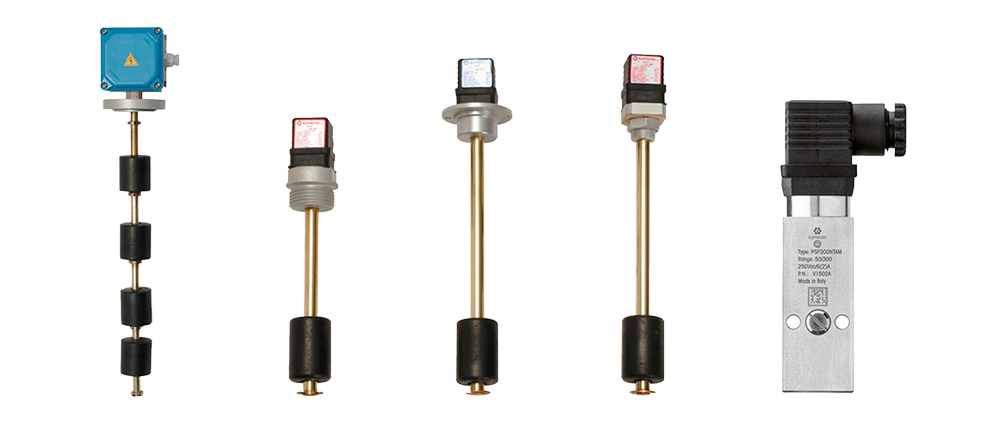
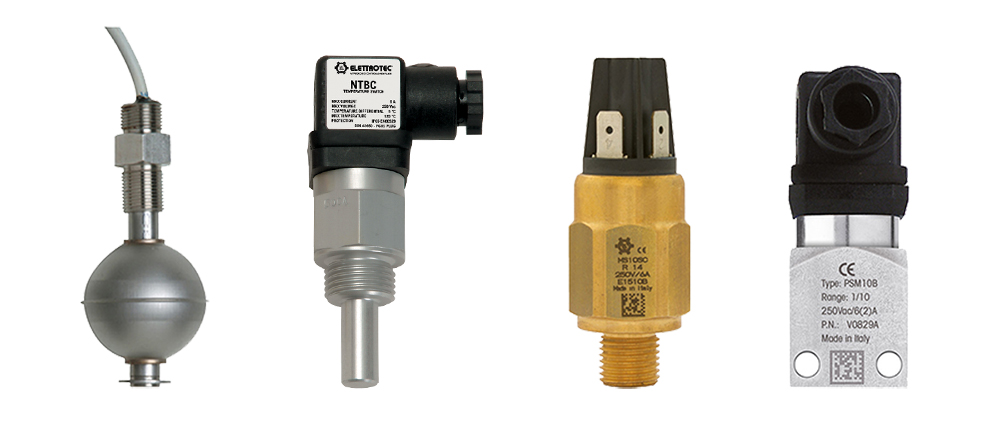
An electromagnetic float device with one or more actuation points, used on tanks and reservoirs to detect the min. or max. level of a liquid. Level detection can be monitored at a distance on a remote control panel.

FLOW INDICATOR
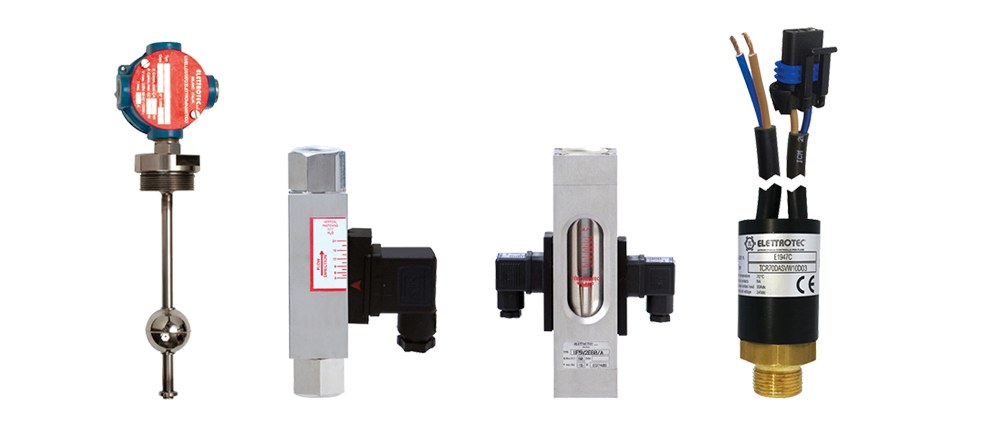
A device designed to monitor the instantaneous flow of a medium and detect any possible variation caused by the process.

FLOW SWITCH
A device designed to detect the insufficient or excessive flow in process systems and give a fixed or adjustable electrical alarm signal with N/O or SPDT contacts.

FLUID/MEDIUM TEMPERATURE
The temperature of the medium, indicated as min. and max. values, specifies the temperatures up to which units can be used. For example, in float level switches the temperature of the medium/fluid is -10°C…+80°C.

FLUID SPECIFIC WEIGHT
Specific Weight (sometimes known also as Specific Gravity) is defined as the weight per unit volume or the force exerted by gravity upon a unit volume of the substance.
Units: Newton’s per cubic meter (N/m3).

FLUID VISCOSITY
Viscosity is the property of a fluid, due to cohesion and interaction between molecules, which offers resistance to sheer deformation. Different fluids deform at different rates under the same shear stress. Fluid with a high viscosity such as syrup, deforms more slowly than fluid with a low viscosity such as water.

HYSTERESIS / DIFFERENTIAL
The hysteresis/differential (sometimes referred to as “dead band”) is the difference between the switch-on (actuation) and the switch-off (de-actuation) point. It can be fixed or adjustable depending on the units. The hysteresis/differential is generally expressed in percentage or as an absolute value referred to the set point. For example, actuation point at 105bar – de-actuation point at 95bar – hysteresis/differential of 10bar.

HYSTERESIS / DIFFERENTIAL ADJUSTING
In units with adjustable hysteresis/differential, the setting can be done using the proper adjusting screw. For example, PSM-PSP pressure switches have an adjustable hysteresis/differential from 10% to 30% of set point.

INDUCTIVE LOAD
A load in which the voltage leads the current.

LEVEL SENSOR
An instrument that monitors continuously the level of a liquid into tanks/reservoirs and sends a proportional electrical signal to a remote control panel.
Max unit height: 2500 mm

MAX PRESSURE
The maximum pressure condition that the unit can withstand without breaking or malfunctioning. All the max. pressure values mentioned in our data sheets refer to static pressures.

NORMALLY CLOSED CONTACT (N/C)
A normally closed switch conducts electricity until the actuator (diaphragm, piston or float) is moved by the media causing the contacts to open.

NORMALLY OPEN CONTACT (N/O)
A normally open switch does not conduct an electrical signal until the actuator (diaphragm, piston or float) is moved by the media causing the contacts to close.

OPERATING PRESSURE
The operating pressure equates the working pressure.

OPERATING TEMPERATURE
The operating temperature is the predetermined actuation value at which a bimetallic temperature switch closes or opens the electrical circuit.
In general, the operating temperature of a unit must be within the range indicated in the data sheet and must not be above or below this range.

OPERATING VOLTAGE / WORKING VOLTAGE
The voltage range for which the device is rated. The stated nominal voltage and the tolerance result in the operating voltage range in with the device functions safely.

PRESSURE SWITCH
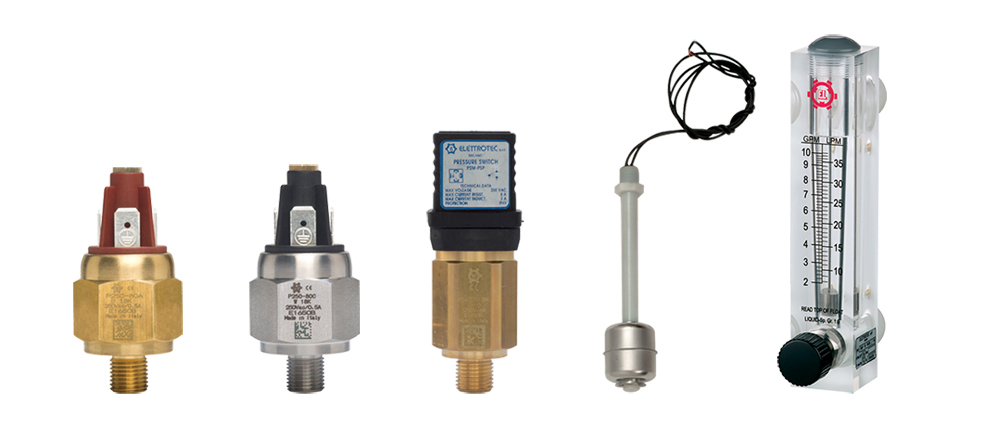
A device, equipped with a specific diaphragm or piston sensing element, that detects a change in pressure and closes or opens one or more electrical switching elements when the set point is reached.

PRESSURE RANGE
The mechanical design of the switch housing enables use of the units in different pressure ranges.

PRESSURE TRANSMITTER/TRANSDUCER
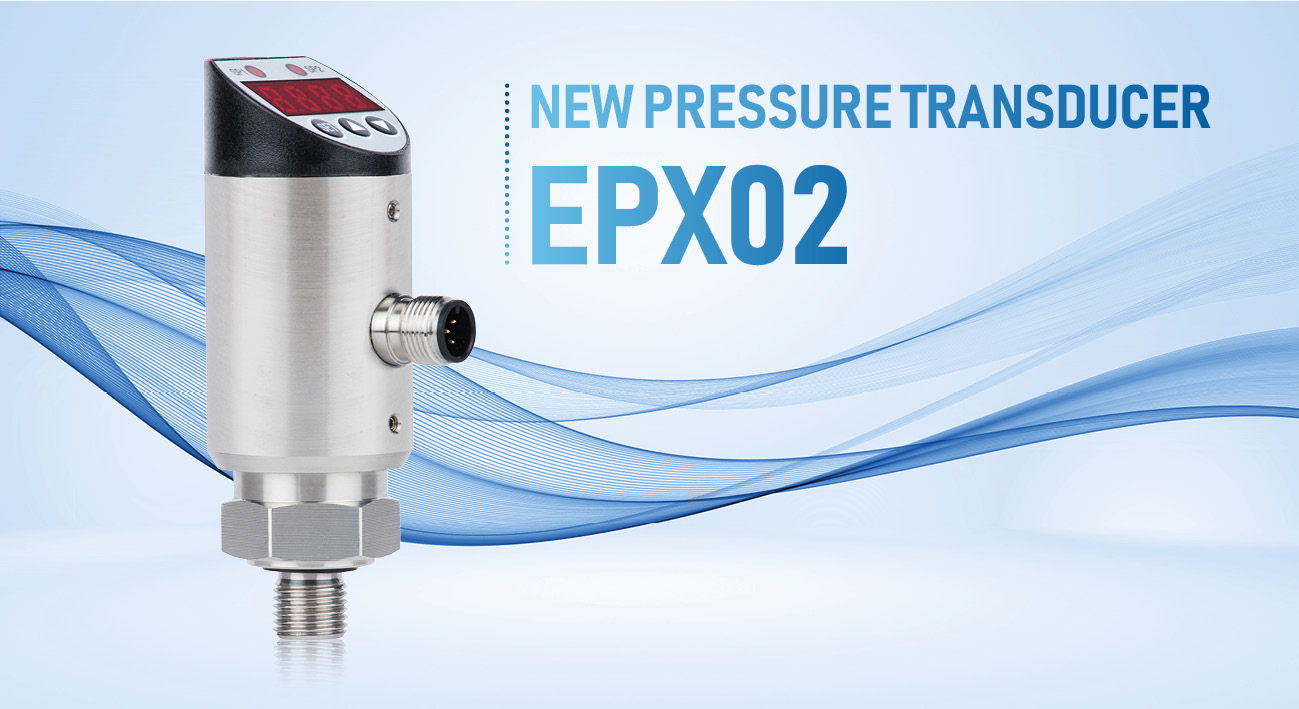
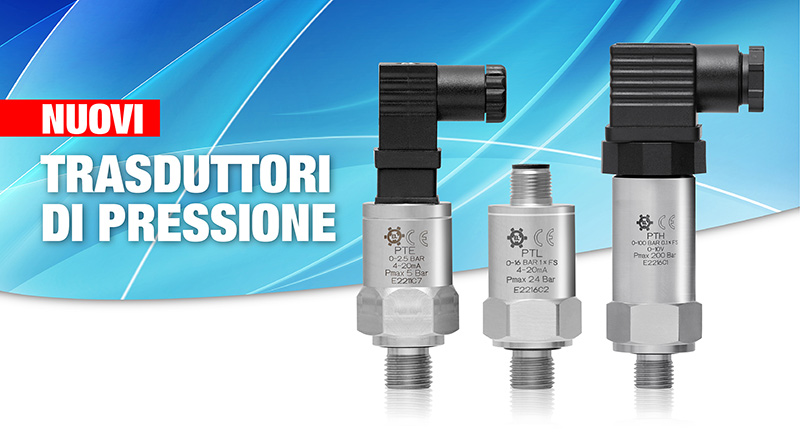
An instrument that senses any change in a pressure system and provides a linear output signal either in current 4/20ma – 0/20mA or voltage 0/10V - 0/5V.

PROOF PRESSURE
This specification is the maximum over-pressure which can be applied to a switch for a specified period of time without causing permanent degradation.

PROTECTION RATING
The protection rating (to CEI EN 60529) defines the degree of protection from ingress of dust and moisture into the unit.
IP00
No protection
IP54
Complete protection against contact with live or internal moving parts. Protection against harmful dust deposits. The ingress of dust cannot be avoided completely, but dust must not penetrate in amounts that impair the operation. Protection against splashed water.
IP65
Complete protection against contact with live parts; protection against the penetration of dust; protection against water jets.
IP67
Complete protection against contact with live parts; protection against the penetration of dust; protection when immersed under defined conditions: 1 m depth of water for 30 minutes

REPEATABILITY
(Refer to: accuracy).

RESISTIVE LOAD
A load in which the voltage is in phase with the current.

RESPONSE PRESSURE
(Refer to: set point, set-point adjustment rising and set-point adjustment falling).

ROOM TEMPERATURE / AMBIENT TEMPERATURE
The room temperature, indicated as min. and max. values, specifies the temperatures up to which units can be used. In our data sheets the room temperature equates the temperature of the medium.

SENSING ELEMENT (DIAPHRAGM/PISTON)
The member in the switch which receives the media and ultimately strokes the electrical contacts to open or close at the adjusted set point.

SET POINT
The pre-determined value that is required to open or close the electrical contacts in the switch. It can be adjusted rising or falling.

SET-POINT ADJUSTMENT FALLING
Decrease of pressure or vacuum until the pre-determined set point is met and the electrical contacts in the switch open or close.

SET-POINT ADJUSTMENT RISING
Increase of pressure or vacuum until the pre-determined set point is met and the electrical contacts in the switch open or close.

SETTING PRESSURE
(Refer to: set point, set-point adjustment rising and set-point adjustment falling).

SINGLE POLE DOUBLE THROW CONTACT (SPDT)
A SPDT switching element has one normally open, one normally closed and one common terminal. Three terminals mean that the switch can be wired with the circuit either normally open (N/O) or normally closed (N/C), or both.

SMART SENSOR
Sensor with integrated AS-i chip and additional functionality, with a built-in interface.

STATIC PRESSURE
The pressure exerted by a still liquid or gas, especially water or air. No operations or pressure loading are present. All the pressure values indicated in our data sheets are meant to be static pressures.

TEMPERATURE RANGE
The range of temperature in which the safe functioning of the device is guaranteed.

TEMPERATURE SWITCH
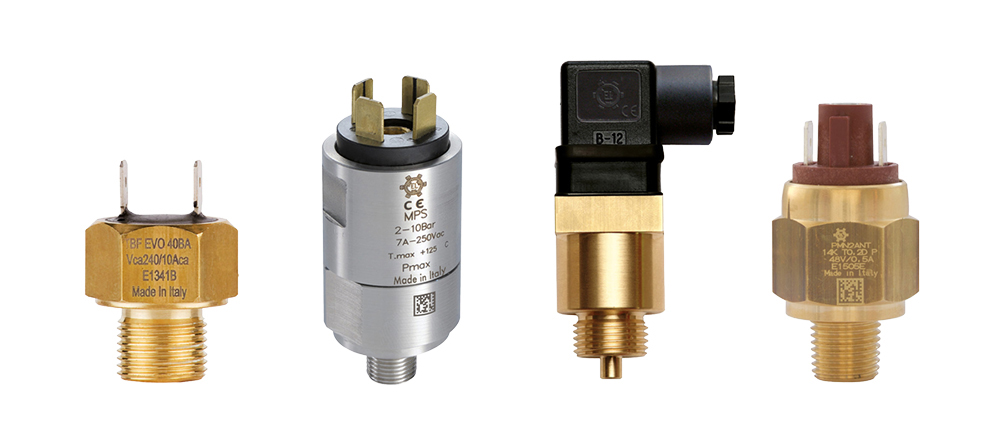
A device used to sense the increase or decrease of temperature in a system; with adjustable or fixed working range and N/O, N/C or SPDT contacts.

TOLERANCE
It refers to the possible variation (min. and max. values) that the set point can have. For example, PMN10 pressure switch: set point at 6.9bar – tolerance ?0.3bar – actuation between 6.6bar and 7.2bar.

VACUUM SWITCH
A device, equipped with a specific diaphragm sensing element, that upon the increase or decrease of a vacuum opens or closes an electrical circuit at a predetermined actuation point.

WORKING PRESSURE
(Refer to: operating pressure).


Legal notes - Privacy